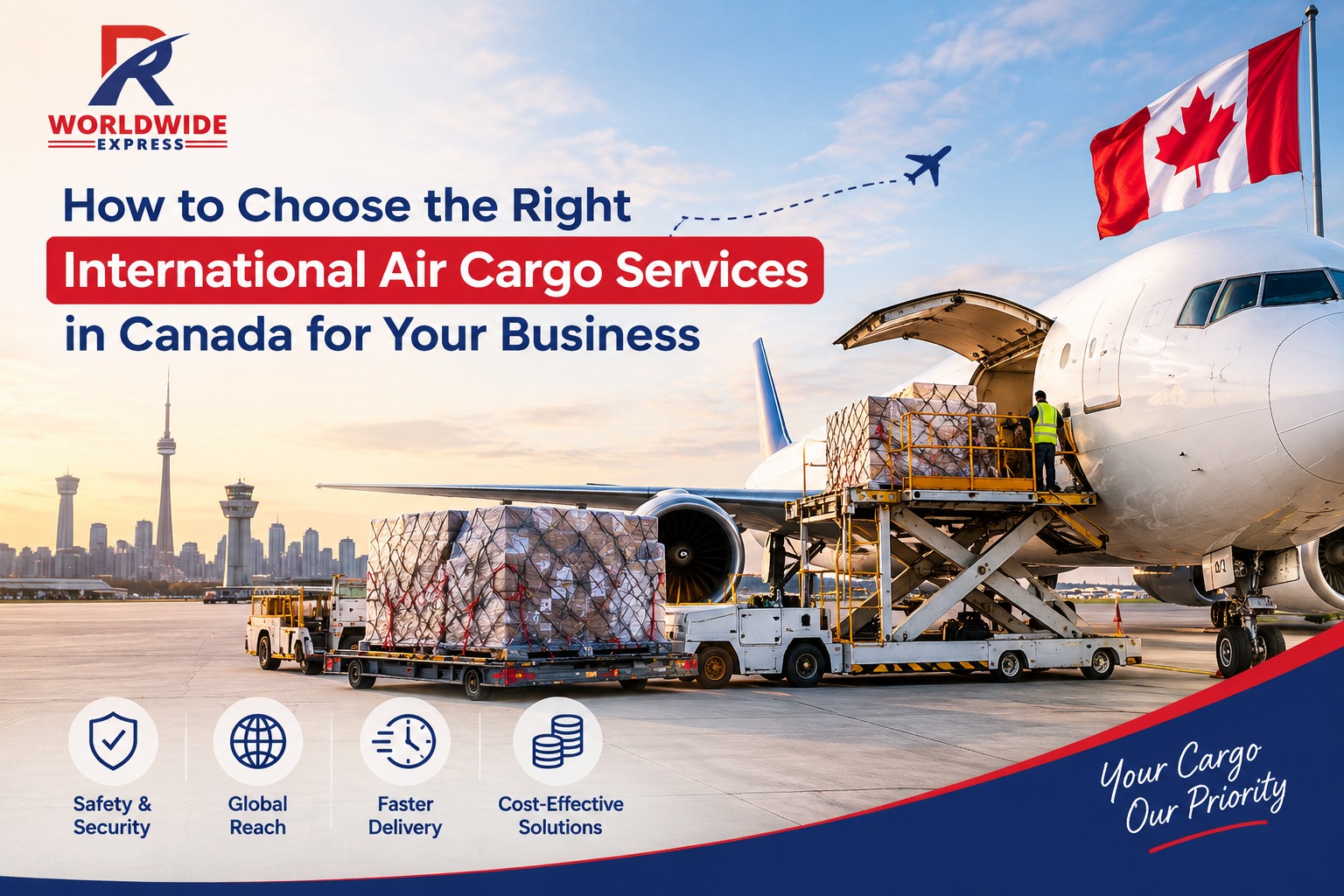
Choosing a shipping partner may seem easy, but it isn't until your products languish at customs, delivery is delayed, and your customer begins to ask questions. It's when companies discover that they did not pay attention to the requirements of the contract. . Choosing the right international air cargo services in Canada isn't just about who quotes the lowest price, it's about who actually gets your cargo where it needs to go, on time, and in one piece.
It will affect your customer relationships, your cash flow and, let's face it, your sanity, whether you're a small business shipping your first international order, or a growing company scaling up your exports. Let's look at what you need to consider when making your provider's comparison.
Why the Right International Air Cargo Services in Canada Matter More Than You Think
Air freight is expensive compared to sea shipping. That's a given. So when businesses choose it, they're usually paying for speed and reliability.
If your chosen provider can't deliver on either of those, you've lost the main reason for paying extra in the first place. A late shipment doesn't just cost you money — it costs you trust with your buyer.
For example, a Toronto-based electronics distributor once shipped a time-sensitive order to a client in Germany. The cargo sat unclaimed at a transfer hub for two extra days because nobody flagged a paperwork issue in advance. The client wasn't upset about the delay itself they were upset that nobody told them it was happening.
That's the real difference between an average provider and a genuinely good one: communication and accountability.
Key Factors to Consider When Comparing Air Freight Cargo Services in Canada
Not every company offering air freight cargo services in Canada operates the same way. Some specialize in specific regions, others in specific industries like pharmaceuticals or perishables. Here's what to actually look at.
1. Network Coverage and Route Options
Ask which countries and airports the provider regularly services. A wide network means more flexibility if your shipping needs change or expand.
If you're shipping to a niche market, confirm they have direct experience there — not just a general claim of "global coverage."
2. Transit Time and Reliability Track Record
Every provider will promise fast delivery. Fewer will show you actual performance data.
Request normal transit times for the route, rather than sales figures. When a provider knows they have a good service, they won't be afraid to tell others about it.
3. Customs Clearance Expertise
This is where shipments get delayed most often. Documents that are incorrectly filled out, no permits, or confusing tariff classification can stall your shipment for days.
A good provider does not reactively deal with this, but proactively. They should flag potential issues before your shipment even leaves the ground.
4. Tracking and Communication Systems
It should not take 5 calls to get the status of your shipment! It's no longer a luxury to have real-time tracking and proactive updates.
That's a red flag and one you should take seriously if a provider can't give you the basic visibility on your shipment's status.
5. Pricing Transparency
Cheap quotes often hide extra fees — fuel surcharges, handling charges, storage costs. Always ask for a full breakdown before committing.
An honest provider from the get-go is likely to be more reputable than a provider that quotes an unreasoned down payment.
What Makes Someone the Best Air Cargo Service Provider
No single certification is a must for quality. There are a handful of indicators that all the best providers share in common, though.
They ask questions before quoting. A generic quote without understanding your product, packaging, or destination usually means generic service too.
They have documented experience with your industry. Electronics items are not the same as temperature-sensitive items. Experience matters here.
They do not pretend they don't have any. A reliable provider will let you know if they are unable to deliver within that time frame, not over promise, then under deliver.
Their customer service is actually reachable. Not just during business hours, but when something urgent comes up outside them too.
If they tick all these boxes, then they are probably worth considering as your best air cargo service provider.
Questions to Ask Before You Sign a Contract
Before committing to any provider, it helps to ask a few direct questions:
- What's your average delay rate on international routes?
- How do you handle customs issues if they arise mid-shipment?
- Can you provide references from businesses in my industry?
- What's included in your quoted price, and what's billed separately?
- Do you offer insurance options for high-value cargo?
By the answers they give, and how quickly they give them, you can tell a lot about how they will act when you're a client.
Red Flags to Watch Out For
There are some warning signs that can be easily overlooked if you're only concerned about the price.
If you get a general answer about delivery dates, it's likely that they are not monitoring their own performance regimen. That's not reassuring.
Reluctance to put terms in writing is another one. If everything is verbal "promises," you have no recourse if something goes wrong.
Lastly, watch for providers who seem unfamiliar with your specific destination country's import regulations. That unfamiliarity often becomes your problem later, not theirs.
Matching the Provider to Your Business Size
A large enterprise shipping weekly bulk cargo has different needs than a small business shipping occasional international orders. So it's worth asking if the provider is designed for your size.
Small companies may find that the providers provide flexible shipping options that require them to pay for only a small amount of bulk shipping. Larger businesses might prioritize dedicated account managers and consistent capacity guarantees instead.
Neither approach is wrong — it just depends on what actually fits how you operate.This also applies to different air freight cargo services in Canada, where not all are suited to dealing with the same volume or urgency.
Final Thoughts
Several things are consistent in selecting the right partner for international air cargo services in Canada: reliability, transparency and true communication. Price is important, but not the most important factor for making a decision.
Before you invest, do some homework and learn what you're paying for; ask the right questions, and do some track record checking. Shipping should be easy, which is why a good provider makes it seem so, even if its behind-the-scenes process isn't.
When you're in the process of comparing options, try companies that are known for their international shipping services, such as R Worldwide Express, which has an easy-to-understand process and reliable service on a variety of routes. Sometimes the easiest way forward is talking directly to a provider and asking them the same questions we've covered here; their answers will tell you everything you need to know.